1
Dean Jutras looks back on year two at CCM
September 23, 2026
CCM Dean Pete Jutras shares a message with the college's community as he enters his third year.
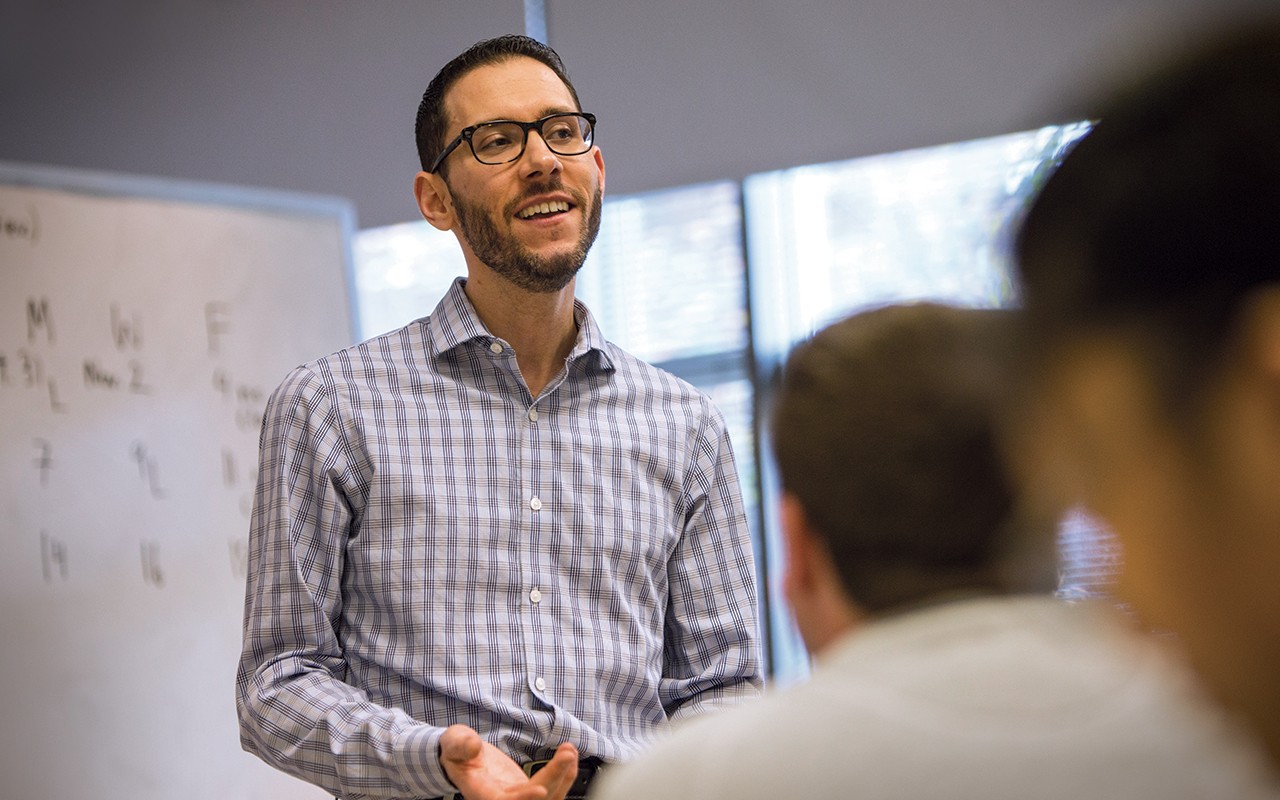
CCM's music theory programs focus on various musical elements and how they work together to create unique compositions.
Our world-renowned faculty — who come from diverse backgrounds and specialize in every era and style from Antiquity to the present — combine rigorous academic training with opportunities for specialization in a variety of areas, helping students learn through hands-on approaches, one-on-one advising, guest lectures and semesterly seminars/colloquium that encourage intelligent discussions between peers.
At the same time, the flexibility of the curriculum and the required cognate (for doctoral students) allow them the opportunity to explore particular fields of interest — whether they be in performance, musicology or composition — to broaden their horizons and gain greater knowledge of the music they are studying. CCM Theory's position within one of the United States' top music programs also means access to acclaimed instrumental/vocal teachers and students, guaranteeing high quality feedback and interaction.

513-556-9464
The master's program is designed to provide a comprehensive course of study in music theory and analysis as well as related subject areas. A candidate is expected to acquire a broad knowledge of music theory and will be introduced to the issues, concepts, and methods pertinent to the field of study. Determination of a candidate's specific responsibilities will be made by an academic adviser and the director of graduate studies. The MM in music theory helps students acquire competence in the broad range of endeavors characteristic of music theory including:
To accomplish these goals, students will also need to develop the requisite skills in musicianship, languages, etc. Determination of a student's specific responsibilities will be made by a principal adviser, cognate adviser and director of graduate studies.
The PhD program in music theory is designed to provide a comprehensive course of study in the theory, literature, and philosophy of music and related subject areas. As opposed to the MM program, the coursework for the PhD program is made up of rotating specialized seminars that offer in-depth coverage of specific areas of interest. Students are expected to acquire competence in the broad range of endeavors characteristic of music theory, including:
To accomplish these goals, students will also need to develop the requisite skills in musicianship, languages, etc. Determination of a student's specific responsibilities will be made by a principal adviser, cognate adviser, and director of graduate studies.
CCM's graduate admissions process begins on August 1 for entrance in the following year's fall semester. All application materials must be submitted on or before December 3 to be considered for specific scholarship awards. Visit the CCM Admissions website for additional application instructions.
Applicants must submit the required pre-screening materials via getacceptd.com/ccm on or before December 3 to be considered for admissions and invited for an audition.
All pieces should be performed from memory except for duo sonatas or the music composed after 1960.
After the application review process, applicants will be scheduled and notified if they are invited for an interview. The two-day interview and exams will take place on campus and virtually online.
New Graduate Assistants teach theory and musicianship courses in the core undergraduate program.
For additional information, contact Professor Steven Cahn.
Students enrolled in a doctoral program at CCM are expected to demonstrate intellectual breadth through the completion of a significant program of study in a secondary field (cognate).
The cognate in Music Composition cognate requires a minimum of 9 credit hours of courses offered within the Composition Department (i.e. with the “COMP” prefix in the course number).
The core course requirement for the cognate is Composition Elective (COMP6030, 1 to 2 course units), which the student should take for at least two consecutive semesters. This course enables the student to compose their own music under the guidance of weekly lessons with one of our Graduate Assistants in Composition.
Beyond that, the student may take any other course within the Composition program, provided the course is at the graduate level (i.e. 6000 course number or above). Available courses for which the student may register include the following:
Interested students first meet with a member of the Composition faculty to determine their interest and readiness to pursue a cognate in Composition. Once accepted, the student draws up a course plan in consultation with a member of the Composition faculty who acts as that student’s cognate advisor. After the student has completed their coursework in the cognate, they consult with their cognate advisor at least one semester before they take the DMA Orals Exam in their major to devise a focused course of study that will provide the basis for questioning during the cognate portion of the orals exam. The cognate advisor then questions the student on composition-related topics for 20 minutes during the cognate portion of the DMA Orals Exam. Once this requirement has been passed, the student has successfully completed the cognate.
The music history cognate will consist of three graduate-level MUHS topics courses or seminars (at least 9 semester hours at the 6000, 8000, or 9000 level). The student should consult with a musicology faculty member whose specialty is in an area of the student’s interest. If the faculty member agrees, they will become the student’s cognate advisor and will help the student draw up a suitable plan of study according to the following guidelines:
The cognate advisor will participate on the committee for the student's final oral examination.
The music theory cognate (12 credit hours) consists of three required courses (9 credit hours) and one graduate-level elective (3 credit hours). The cognate aims to provide students with a solid grounding in advanced tonal and post-tonal analysis, theory pedagogy and another practical/theoretical area depending on the student’s interest. Applicants will be interviewed by the cognate advisor (a member of the music theory faculty) to discuss their experience and interest in music theory. Approval will be granted to students with sufficient background and proficiency in analytical and/or theoretical studies in music at the bachelor’s and master’s levels.
Required Music Theory Cognate Courses (9 credit hours)
Cognate electives (3 credit hours)
Students may choose any one course from the following list of graduate-level courses:
Students enrolled in a doctoral program at CCM are expected to demonstrate intellectual breadth through the completion of a significant program of study in a secondary field (cognate).
Requirements (9-15 credits)*:
* The following courses may not be used for cognate credits:
The cognate advisor will participate on the committee for the student's final oral examination.
September 23, 2026
CCM Dean Pete Jutras shares a message with the college's community as he enters his third year.
September 14, 2026
UC’s College-Conservatory of Music will welcome a variety of new faculty and staff members to its roster of distinguished performing and media arts experts, researchers and educators this fall.
September 8, 2026
UC College-Conservatory of Music Dean Pete Jutras has announced the appointment of Jordan M. Davis, MA, as the college's new Assistant Dean of Admissions. In this role, Davis will be responsible for the vision, strategy and execution of all undergraduate and graduate recruitment and admissions for CCM. Working in partnership with college and university leadership, Davis will work to ensure that CCM's enrollment goals continue to align with its artistic and academic priorities. His appointment begins on Oct. 1, 2026.
August 20, 2026
Experience world-class performances by the next generation of performing and media artists at the University of Cincinnati College-Conservatory of Music (CCM). With more than 130 different performances and events, there is something happening nearly every week of the school year!
June 2, 2026
CCM invites audiences to explore the city of Cincinnati's musical spaces, places and sounds via two engaging documentaries in a single program. Join us at the Garfield Theatre on Saturday, June 13, 2026, for a Movie Screening and Discussion that delves into Cincinnati's exciting musical heritage. Student discount tickets are available at Cincinnati World Cinema. Screenings occur at both 3:30 p.m. and 7 p.m. Filmmakers in attendance. For information and tickets: https://cincyworldcinema.org/cincy-sounds/
May 11, 2026
UC College-Conservatory of Music Dean Pete Jutras has announced the appointment of Rachel Roberts, EdD, as CCM's inaugural Associate Dean of Strategy and Operations. In this newly-created role, Roberts will partner with Dean Jutras and other college leaders to advance strategic, operational and academic priorities. Roberts is nationally recognized for developing leaders and advancing how musicians and arts organizations learn, adapt and lead in an evolving arts landscape. Her appointment officially begins on July 6, 2026.
January 12, 2026
Show your school spirit this spring with official CCM apparel! New UC College-Conservatory of Music apparel is available for purchase online. CCM's Spring 2026 apparel can be ordered online now through Feb. 2, 2026. You can preview five wearable items below.
November 21, 2025
UC’s College-Conservatory of Music will welcome a variety of new faculty and staff members to its roster of distinguished performing and media arts experts, researchers and educators this fall.
August 19, 2025
Experience world-class performances by the next generation of performing and media artists at the University of Cincinnati College-Conservatory of Music (CCM)! The college’s fall 2025 schedule of major events is now available; tickets are on sale now through the CCM Box Office.